


Water Intake and Disease Spread: The Most Overlooked Risk Source on Indonesian Farms
Along the heavily populated coastlines of Java Island, Indonesia, shrimp farmers make critical biosecurity decisions every day, often without being able to see the risks moving through the water around them.
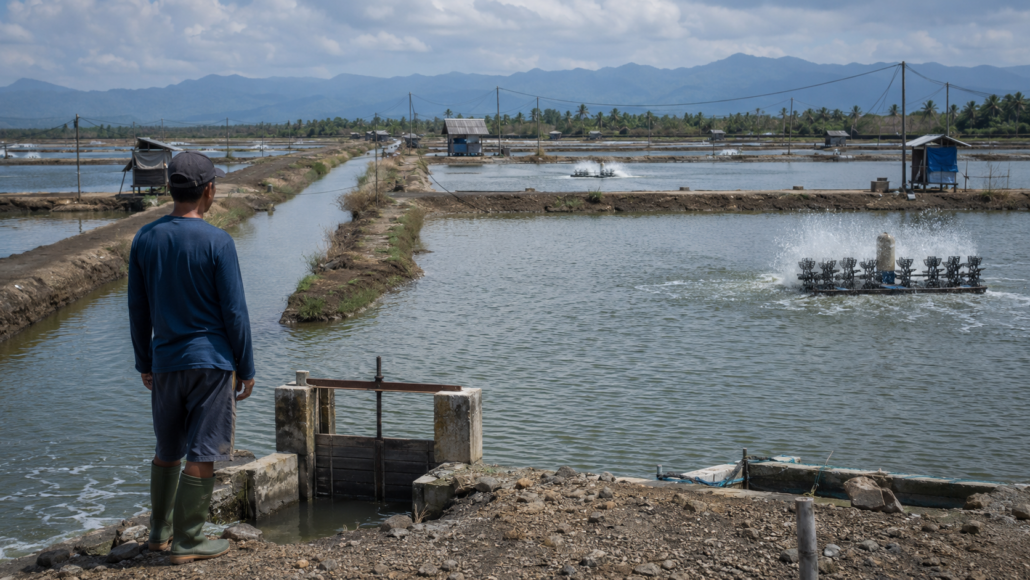
At the edge of a shrimp pond, a farmer watches the paddlewheels churn the water — a familiar and reassuring sign of aeration. Satisfied, he opens the intake gate to pull fresh water from a nearby coastal canal.
What he cannot see is that two kilometres upstream, a neighbouring farm is secretly draining a pond devastated by early mortality syndrome and white spot disease. By opening his gate, he is not just taking in water; he is inviting billions of bacterial and viral pathogens directly into his stock.
A recent biosecurity survey conducted across Java Island revealed the concerning reality: shared water sources between neighbouring aquaculture operations are extremely common, yet they remain one of the least managed biosecurity threats in the region. While farmers invest heavily in high-quality Specific Pathogen Free (SPF) postlarvae, those efforts can be undermined at the intake pipe.
To safeguard the future of Indonesian shrimp farming, the industry needs to take a closer look at how shared water can act as a pathway for disease transmission, which pathogens are taking advantage of this gap, and what practical steps can help farms move toward stronger, more modern biosecurity.
The Shared Water Crisis: An Island-Wide Vulnerability
Java’s coastal landscapes are a patchwork of intensive, semi-intensive, and traditional aquaculture farms. Because of high farm density, multiple independent operations usually draw from and discharge into the exact same tidal canals or coastal estuaries.
Biosecurity surveys highlight a critical systemic flaw: what one farm discards as effluent (wastewater) quickly becomes the intake water for another down the canal. This reality creates a shared aquatic ecosystem where an outbreak on a single farm can rapidly trigger a localised epidemic. Biosecurity becomes everyone’s responsibility.
Historically, biosecurity efforts have focused primarily on exclusion, specifically using bird netting, crab guard fences, disinfecting footwear and vehicle tyres. While these measures help control physical carriers (vectors), they ignore the most efficient vector of all: the water itself.
Water is an excellent solvent and a highly supportive medium for microbial life. When a farm draws raw, untreated water from a shared canal, it acts as a blind gamble. Pathogens can enter freely, floating naked in the water column, riding on suspended organic matter, or hiding inside microscopic wild copepods and post-larval crabs.

The Four Horsmen of the Intake Gate
1. White Spot Syndrome Virus (WSSV): A highly contagious virus capable of causing rapid and severe mortality. WSSV can move through water and may also be carried by infected wild crustaceans entering through the intake system.
2. Enterocytozoon hepatopenaei (EHP): A microsporidian parasite associated with poor growth, size variation, and reduced feed efficiency. Its resilient spores can persist in water and sediments and spread between farms through shared canals.
3. Acute Hepatopancreatic Necrosis Disease (AHPND): Caused by toxin-producing strains of Vibrio parahaemolyticus, AHPND can result in severe early-cycle losses. An outbreak upstream can increase the concentration of harmful bacteria in water drawn by neighbouring farms.
4. Infectious Myonecrosis Virus (IMNV): A viral disease associated with white muscle and ongoing mortality. IMNV can be shed through faeces and carcasses, allowing infectious material to move downstream in discharge water.
Not All Water Testing Provides the Same Confidence
Recognising the need to test is only the first step. The value of any result depends on whether the testing method can detect the right pathogens at the concentrations present in environmental water.
Basic pond-side methods and limited local panels may identify obvious contamination, but they can miss low-level or unexpected threats, particularly before clinical signs appear. Some methods may also provide an incomplete or misleading picture by testing for only one organism, relying on non-specific indicators, or failing to distinguish between closely related strains.
Genics Shrimp MultiPath™ uses highly sensitive, species-specific molecular testing to screen a single sample for multiple important shrimp pathogens. This gives farmers a more complete picture of the risks present in their water and supports better-informed decisions around treatment, stocking, and ongoing surveillance.
For pre-stocking biosecurity, the goal should not simply be to perform a test. It should be to generate accurate, actionable pathogen data that farmers can trust.
Moving Beyond Visual Assessment: The Critical Need for Environmental Testing
Many farmers still assess water safety using visual cues such as clarity, colour, and smell. Unfortunately, water that appears clean can still contain Vibrio bacteria, viral particles or EHP spores at levels capable of threatening the next crop.
Waiting for shrimp to show visible signs of disease means the opportunity for prevention has already passed. Once symptoms such as white muscle, lethargy, or abnormal mortality appear, management becomes a damage-control exercise.
Proactive environmental testing through Genics allows farmers to identify pathogen risks before stocking and verify whether filtration and water treatment have been effective.
The Pre-Stocking Checklist
Routine environmental DNA (eDNA) testing should be a mandatory requirement before releasing post-larvae into a pond.
By taking a water sample from the treatment reservoir and sending it for advanced molecular screening, a farmer receives an early-warning diagnostic report. If the results show a positive hit for EHP spores or high levels of toxic Vibrio, the farmer can halt stocking, extend the sterilisation cycle, or apply a higher dose of sanitiser. Spending a small amount on an early diagnostic test can save an entire crop worth tens of thousands of dollars.

Actionable Takeaways for Farm Management
Addressing the shared water risk requires shifting from a reactive mindset to a proactive, defensive strategy. Farm operators should implement these four structural adjustments immediately:
- Dedicate Space for Water Reservoirs: Allocate at least 20% to 30% of total farm area to water sedimentation and treatment ponds. Sacrificing a culture pond to create a treatment reservoir reduces overall stocking area, but drastically improves survival rates, de-risks your investments and over time will deliver profitability across the rest of the farm.
- Synchronise Actions with Neighbours: Form local aquaculture clusters or management groups. Share information regarding disease outbreaks transparently. If a neighbouring farm is discharging water due to an emergency harvest, upstream and downstream farms must know immediately so they can close their intake gates.
- Enforce Strict Intake Filtration: Treat every drop of incoming water as contaminated. Never pump directly from a canal into a production pond containing shrimp, especially during the early stages of production.
- Establish a Proactive Surveillance Testing Routine: Make environmental pathogen screening with Genics MultiPath™ a non-negotiable step in the pre-stocking workflow. Test the intake canal, test the water after treatment, and continue to test pond water every two weeks throughout the culture cycle.
Filtration and water treatment are essential, but their effectiveness depends on knowing what risks are present. Routine molecular testing through Genics gives farmers the evidence needed to verify that treatment has worked, identify emerging threats, and make more informed decisions before water reaches the production pond. Using Genics Shrimp MultiPath™ at key points, including the intake source, after treatment, and throughout the culture cycle, allows farmers to move from assuming their water is safe, to knowing it is.
The shared canals of Java connect the health and productivity of every farm along their banks. No farm can control what is discharged upstream, but every farm can strengthen the barriers between contaminated water and its shrimp. By combining effective filtration, appropriate water treatment, communication between neighbouring farms, and routine pathogen surveillance with Genics, farmers can reduce uncertainty and respond to risks earlier. Securing the future of Indonesian shrimp farming starts with treating water intake not as a routine operational step, but as one of the farm’s most important biosecurity checkpoints.
Want to know more about Genics Shrimp MultiPath™?
Get all the information you need and book a free consultation with Genics experts today.


