The Postlarvae Dilemma: Why Visual Quality Checks Only Tell Part of the Story

On a modern shrimp farm, the arrival of a new batch of postlarvae (PL) is a moment of calculated optimism. Assumptions are made that the animals have been carefully produced, transported and acclimated. At first inspection, they can appear active, uniform and healthy: swimming strongly, feeding well and showing no obvious abnormalities.

Yet, several weeks after stocking, two apparently similar batches can follow very different paths. One crop may progress steadily, while another experiences uneven growth, declining survival or mortality that was not anticipated at the time of stocking.

This is the postlarvae dilemma. Visual quality matters, but appearance alone cannot reveal every health risk. For farmers whose crop economics depend heavily on what enters the pond, that missing information can be costly.

1. Visual Quality Checks Answer Only Part of the Question

Visual inspections and basic morphometric measurements remain important parts of postlarvae quality assessment. A healthy-looking batch may feature:

  • A filled gut: indicating active feeding at the time of inspection.
  • A clean carapace: with no obvious fouling organisms or visible abnormalities.
  • A strong muscle-to-gut ratio: supporting an assessment of physical development.
  • Consistent development: including relatively uniform size and moulting patterns across the batch.

These visual indicators remain valuable, but they cannot reveal every health risk. A batch may appear active, uniform and well-fed while carrying a pathogen at a level too low to produce visible signs. Visual assessment shows how the postlarvae look at the time of inspection; sensitive pathogen testing adds another layer of information about risks that may otherwise enter the pond undetected.


Supplier health certification and Specific Pathogen Free (SPF) status are important parts of postlarvae procurement, but they should not be interpreted as protection against every pathogen risk. SPF status applies to specified pathogens within a defined surveillance program; it does not mean the animals are free from all pathogens or that exposure cannot occur later.

Independent, batch-specific testing provides an additional verification point. It does not replace supplier testing or visual quality assessment; it strengthens them by adding another layer of pathogen data to the stocking decision.

2. Hidden Pathogen Risk Can Affect Farm Performance

When a pathogen is present in apparently healthy postlarvae, its impact may not be immediate or inevitable. The risk is that infection may amplify or interact with environmental stress after stocking. Whether this develops into a production problem depends on multiple factors, including the pathogen, pathogen load, co-infections, animal health, pond conditions and farm management.


The Commercial Cost of Uncertainty

When a health issue becomes apparent after stocking, the cost can extend well beyond the original purchase price of the postlarvae. Reduced feeding, uneven growth and mortality can disrupt feed estimates, increase effective Feed Conversion Ratio (FCR) and contribute to a less uniform crop.

The later a problem becomes visible, the more feed, energy, labour and pond capacity may already have been committed. At harvest, lower survival and a wider size distribution can reduce saleable biomass and weaken the value of the crop.

This does not mean every pathogen detection predicts disease or poor performance. It means farmers need reliable data to interpret pathogen risk in context and decide how that risk should be managed before additional resources are committed.

3. Building a Stronger Postlarvae Verification Process

Leading hatcheries and farms are increasingly treating postlarvae health verification as a shared responsibility. The goal is not to question every supplier claim, but to ensure both parties are making decisions from the strongest available information.

Practical verification points can include:

  • Assessing visual and physical quality: using agreed hatchery and farm criteria.
  • Collecting representative samples: from the batch that will be transferred or stocked.
  • Using sensitive, specific multi-pathogen testing: suited to apparently healthy animals.
  • Reviewing pathogen presence and load: before movement, quarantine release or stocking.
  • Agreeing actions when risk is identified: such as further sampling, holding a batch or strengthening biosecurity controls.


Different Tests Answer Different Questions

Single-target or point-of-care testing can be useful when animals are clinically affected and there is a clear suspected cause. Routine monitoring of apparently healthy postlarvae, quarantine and translocation testing are different tasks: they require broader visibility across multiple pathogens because there may be no clinical signs to guide target selection.

Not all PCR testing provides the same level of visibility. Test coverage, target specificity, analytical sensitivity, sample selection, replication, quality controls and result interpretation all influence the value of the data. Quantitative PCR can also provide pathogen load information, giving farms and hatcheries more context for risk-based decisions.

Digital imaging can strengthen measurement of size and uniformity, but it cannot replace pathogen testing. These tools answer different questions and are most useful when applied as complementary layers of postlarvae quality assurance.

Adding Pathogen Visibility Before Stocking

High-quality postlarvae cannot be defined by appearance alone. Visual assessment, hatchery quality controls and supplier health documentation all provide valuable information, but none can show farmers every pathogen risk that may be present in apparently healthy animals.

No single test can guarantee farm performance. However, pathogen testing can close an important information gap before stocking. Genics Shrimp MultiPath3.0™ (SMP3.0™) screens for 19 shrimp pathogens in one test, providing hatcheries and farmers with comprehensive data to help assess pathogen risk before stocking and continue monitoring across production.

Used alongside representative sampling, visual quality checks and strong biosecurity, SMP3.0™ supports better-informed stocking decisions — helping teams identify risks earlier, protect their investment and stock with greater confidence.


Want to know more about Genics Shrimp MultiPath™?  

Get all the information you need and book a free consultation with Genics experts today.


Water Intake and Disease Spread: The Most Overlooked Risk Source on Indonesian Farms

Along the heavily populated coastlines of Java Island, Indonesia, shrimp farmers make critical biosecurity decisions every day, often without being able to see the risks moving through the water around them.

At the edge of a shrimp pond, a farmer watches the paddlewheels churn the water — a familiar and reassuring sign of aeration. Satisfied, he opens the intake gate to pull fresh water from a nearby coastal canal.

What he cannot see is that two kilometres upstream, a neighbouring farm is secretly draining a pond devastated by early mortality syndrome and white spot disease. By opening his gate, he is not just taking in water; he is inviting billions of bacterial and viral pathogens directly into his stock.

A recent biosecurity survey conducted across Java Island revealed the concerning reality: shared water sources between neighbouring aquaculture operations are extremely common, yet they remain one of the least managed biosecurity threats in the region. While farmers invest heavily in high-quality Specific Pathogen Free (SPF) postlarvae, those efforts can be undermined at the intake pipe.

To safeguard the future of Indonesian shrimp farming, the industry needs to take a closer look at how shared water can act as a pathway for disease transmission, which pathogens are taking advantage of this gap, and what practical steps can help farms move toward stronger, more modern biosecurity.

The Shared Water Crisis: An Island-Wide Vulnerability

Java’s coastal landscapes are a patchwork of intensive, semi-intensive, and traditional aquaculture farms. Because of high farm density, multiple independent operations usually draw from and discharge into the exact same tidal canals or coastal estuaries.

Biosecurity surveys highlight a critical systemic flaw: what one farm discards as effluent (wastewater) quickly becomes the intake water for another down the canal. This reality creates a shared aquatic ecosystem where an outbreak on a single farm can rapidly trigger a localised epidemic. Biosecurity becomes everyone’s responsibility.

Historically, biosecurity efforts have focused primarily on exclusion, specifically using bird netting, crab guard fences, disinfecting footwear and vehicle tyres. While these measures help control physical carriers (vectors), they ignore the most efficient vector of all: the water itself.

Water is an excellent solvent and a highly supportive medium for microbial life. When a farm draws raw, untreated water from a shared canal, it acts as a blind gamble. Pathogens can enter freely, floating naked in the water column, riding on suspended organic matter, or hiding inside microscopic wild copepods and post-larval crabs.


The Four Horsmen of the Intake Gate

1. White Spot Syndrome Virus (WSSV): A highly contagious virus capable of causing rapid and severe mortality. WSSV can move through water and may also be carried by infected wild crustaceans entering through the intake system.

2. Enterocytozoon hepatopenaei (EHP): A microsporidian parasite associated with poor growth, size variation, and reduced feed efficiency. Its resilient spores can persist in water and sediments and spread between farms through shared canals.

3. Acute Hepatopancreatic Necrosis Disease (AHPND): Caused by toxin-producing strains of Vibrio parahaemolyticus, AHPND can result in severe early-cycle losses. An outbreak upstream can increase the concentration of harmful bacteria in water drawn by neighbouring farms.

4. Infectious Myonecrosis Virus (IMNV): A viral disease associated with white muscle and ongoing mortality. IMNV can be shed through faeces and carcasses, allowing infectious material to move downstream in discharge water.


View Genics Detailed Pathogen Guides for More Information

Not All Water Testing Provides the Same Confidence

Recognising the need to test is only the first step. The value of any result depends on whether the testing method can detect the right pathogens at the concentrations present in environmental water.

Basic pond-side methods and limited local panels may identify obvious contamination, but they can miss low-level or unexpected threats, particularly before clinical signs appear. Some methods may also provide an incomplete or misleading picture by testing for only one organism, relying on non-specific indicators, or failing to distinguish between closely related strains.

Genics Shrimp MultiPath™ uses highly sensitive, species-specific molecular testing to screen a single sample for multiple important shrimp pathogens. This gives farmers a more complete picture of the risks present in their water and supports better-informed decisions around treatment, stocking, and ongoing surveillance.

For pre-stocking biosecurity, the goal should not simply be to perform a test. It should be to generate accurate, actionable pathogen data that farmers can trust.

Moving Beyond Visual Assessment: The Critical Need for Environmental Testing

Many farmers still assess water safety using visual cues such as clarity, colour, and smell. Unfortunately, water that appears clean can still contain Vibrio bacteria, viral particles or EHP spores at levels capable of threatening the next crop.

Waiting for shrimp to show visible signs of disease means the opportunity for prevention has already passed. Once symptoms such as white muscle, lethargy, or abnormal mortality appear, management becomes a damage-control exercise.

Proactive environmental testing through Genics allows farmers to identify pathogen risks before stocking and verify whether filtration and water treatment have been effective.

The Pre-Stocking Checklist

Routine environmental DNA (eDNA) testing should be a mandatory requirement before releasing post-larvae into a pond.


Download Genics Pre-Stocking Checklist

By taking a water sample from the treatment reservoir and sending it for advanced molecular screening, a farmer receives an early-warning diagnostic report. If the results show a positive hit for EHP spores or high levels of toxic Vibrio, the farmer can halt stocking, extend the sterilisation cycle, or apply a higher dose of sanitiser. Spending a small amount on an early diagnostic test can save an entire crop worth tens of thousands of dollars.


Actionable Takeaways for Farm Management

Addressing the shared water risk requires shifting from a reactive mindset to a proactive, defensive strategy. Farm operators should implement these four structural adjustments immediately:

  • Dedicate Space for Water Reservoirs: Allocate at least 20% to 30% of total farm area to water sedimentation and treatment ponds. Sacrificing a culture pond to create a treatment reservoir reduces overall stocking area, but drastically improves survival rates, de-risks your investments and over time will deliver profitability across the rest of the farm.
  • Synchronise Actions with Neighbours: Form local aquaculture clusters or management groups. Share information regarding disease outbreaks transparently. If a neighbouring farm is discharging water due to an emergency harvest, upstream and downstream farms must know immediately so they can close their intake gates.
  • Enforce Strict Intake Filtration: Treat every drop of incoming water as contaminated. Never pump directly from a canal into a production pond containing shrimp, especially during the early stages of production.
  • Establish a Proactive Surveillance Testing Routine: Make environmental pathogen screening with Genics MultiPath™ a non-negotiable step in the pre-stocking workflow. Test the intake canal, test the water after treatment, and continue to test pond water every two weeks throughout the culture cycle.

Filtration and water treatment are essential, but their effectiveness depends on knowing what risks are present. Routine molecular testing through Genics gives farmers the evidence needed to verify that treatment has worked, identify emerging threats, and make more informed decisions before water reaches the production pond. Using Genics Shrimp MultiPath™ at key points, including the intake source, after treatment, and throughout the culture cycle, allows farmers to move from assuming their water is safe, to knowing it is.

The shared canals of Java connect the health and productivity of every farm along their banks. No farm can control what is discharged upstream, but every farm can strengthen the barriers between contaminated water and its shrimp. By combining effective filtration, appropriate water treatment, communication between neighbouring farms, and routine pathogen surveillance with Genics, farmers can reduce uncertainty and respond to risks earlier. Securing the future of Indonesian shrimp farming starts with treating water intake not as a routine operational step, but as one of the farm’s most important biosecurity checkpoints.

Want to know more about Genics Shrimp MultiPath™?  

Get all the information you need and book a free consultation with Genics experts today.


Book A Consultation

The Trojan Horse of Disease for Piggeries: Transport Trucks

For pig producers, biosecurity conversations usually centre on animal movement, herd health, staff hygiene, visitor control, and shed management. All of that matters. But one of the most underestimated disease risks in the system may be parked right outside the gate: the transport truck.

A truck is more than a logistics tool. It is a moving interface between farms, loading ramps, wash bays, drivers, equipment, and pigs of varying health status. With every movement comes the potential to pick up and carry contamination, often without any obvious visual warning. By the time disease appears on-farm, the real introduction point may already be behind you.

Where the Risk Really Sits 

When people think about transport biosecurity, the focus often lands on whether a truck has been washed. That matters, of course, but the real risk is broader than the trailer floor alone.

It sits across the full transport interface: loading areas, driver movement, equipment, boots, washdown quality, and the line between the outside environment and the piggery itself. A truck may look clean while still carrying biosecurity pressure that is not immediately visible.


The Visibility Gap 

That is what makes transport such a difficult challenge. Unlike a clinical issue in a shed, truck-related risk does not always announce itself. It moves quietly through routine operations, which makes it easy to normalise and easy to miss.

This is where stronger surveillance has a role to play. If trucks are already moving through multiple sites and environments, they can also offer a practical way to monitor what may be circulating across those movements.


Discover Comprehensive Surveillance Testing with Pork MultiPath™

From Transport Risk to Surveillance Opportunity 

James Seckold, CEO at Sentinl, says that is exactly what made the approach valuable for their team.

“We’ve added Genics Bioaerosol Sampling to our pig transport trucks as a practical, non-invasive way to capture an airborne snapshot during movements,” he says. “It’s a low-labour approach that supports stronger biosecurity decision-making without needing to handle animals.”

That shift matters. Rather than treating trucks only as a risk point, they can also be treated as a surveillance point — a place to gather environmental intelligence that helps producers and service providers move beyond assumption and toward evidence.


Why Practicality Matters

Of course, surveillance is only useful if it is practical enough to apply consistently in the real world.

As Seckold explains, “The biggest win is visibility and making frequent surveillance more feasible.”

That feasibility is important. In biosecurity, methods that are too disruptive, too expensive, or too difficult to repeat rarely become routine. But when surveillance is simple and scalable, it becomes far more useful as an ongoing management tool.

Transport trucks deserve more attention than they often receive. Not only as a biosecurity pressure point, but as a valuable place to monitor what may be moving through the system before it shows up somewhere more costly. Because sometimes, the most important biosecurity insight is not inside the shed at all. It is already on the truck.

Want to know more about Pork MultiPath™?  

Get all the information you need and book a free consultation with Genics experts today.


Book A Consultation

Shrimp Farms Achieve Measurable Improvements in Shrimp Farm Performance through Genics’ Biosecurity Audits

Disease outbreaks such as infectious myonecrosis virus (IMNV), White Spot Syndrome virus (WSSV) and acute hepatopancreatic necrosis disease (AHPND) continue to pose significant challenges in shrimp aquaculture, with major implications for farm productivity and economic sustainability. A large-scale Indonesian shrimp farming company partnered with Genics to implement comprehensive biosecurity audits across multiple farm sites. This collaboration resulted in substantial improvements in survival rates, yields, and overall farm resilience, offering valuable insights into the role of structured biosecurity interventions in modern aquaculture.


Find Out More About Genics Biosecurity

The Indonesian shrimp industry is a vital contributor to global aquaculture production, but disease-related losses remain a persistent challenge. Pathogen incursions can rapidly spread within and between ponds, leading to high mortality and economic losses. In this context, the producers identified the need to strengthen its biosecurity practices to safeguard its production systems and support its growth trajectory.

Genics was engaged to conduct biosecurity audits aimed at:

  1. Assessing existing infrastructure and operational practices for potential biosecurity gaps.
  2. Providing targeted recommendations for improvements based on risk assessments.
  3. Supporting the implementation of these recommendations through personnel training and ongoing monitoring.
  4. Establishing a framework for early detection and containment of pathogens to improve overall farm performance.

Audit Scope and Key Measures 

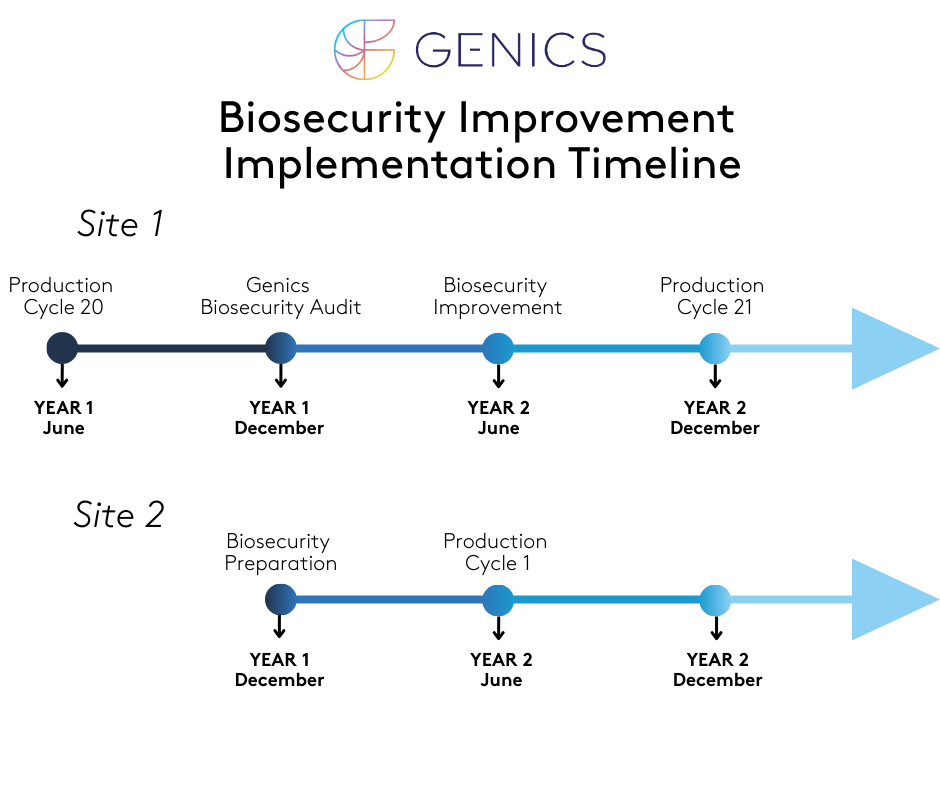
Genics’ biosecurity audits were carried out at two primary production sites: Site 1 (4.41 ha) and Site 2 (11.9 ha). The audits encompassed:

  • Infrastructure improvements: Upgrades included the installation of footbaths, fencing, and the adoption of a one-gate system to minimize external pathogen entry.
  • Biosecurity zone delineation: Farms were reorganized into distinct biosecurity zones to control the flow of personnel, equipment, and water within each site.
  • Water sterilization protocols: Enhanced water sterilization measures during pond preparation and daily operations were implemented to reduce pathogen loads in the environment.
  • Stocking route optimization: Stocking routes were redesigned to minimize cross-contamination risks between ponds.
  • Standard Operating Procedures (SOPs): Farm-specific SOPs were developed for daily hygiene practices, water management, and emergency response protocols.
  • Personnel training: Genics worked with the producers directly to deliver comprehensive training for farm teams, ensuring that biosecurity practices were understood and consistently applied.
  • Designation of biosecurity responsibility: A dedicated person in charge (PIC) for biosecurity was appointed at each site, with accountability for maintaining compliance and coordinating with Genics’ team.


Pathogen Surveillance and Monitoring

A critical component of Genics’ approach was the integration of pathogen surveillance into routine farm operations.

  • Site 1: Pathogen surveillance across three consecutive cycles identified the presence of IMNV. In each case, early detection enabled the implementation of targeted containment measures, preventing broader disease spread across the site. Additionally, identifying the pathogen source to prevent future entry was achieved.
  • Site 2: Surveillance efforts detected pathogens in the first two production cycles. These findings guided immediate containment strategies and informed farm-level adjustments to reduce pathogen pressure in subsequent cycles.

The proactive nature of this surveillance program marked a significant shift in the operational paradigm, moving from a reactive approach — where disease outbreaks were addressed only after clinical signs appeared — to a preventive model focused on early intervention.


Outcomes: Survival Rates and Yields

Implementation of Genics’ biosecurity recommendations led to demonstrable improvements in key production metrics:

Site 1 (4.41 ha)

  • Survival Rate: Increased from 71.1% in Cycle 19 to 90% in Cycle 22, representing a 26.6% improvement.
  • Productivity: Rose from 28.36 tonnes/ha to 40.6 tonnes/ha, a 43.2% increase.
  • Revenue: Increased from IDR 9.3 billion to IDR 13 billion, a 39.4% gain.
  • Gross Profit Margin: Improved from 27% to 49%, an 81.5% increase in profit margin.

Site 2 (11.9 ha)

Gross Profit Margin: Increased from 13.8% to 34.69%, a 151.4% improvement in profit margin.

Survival Rate: Increased from 84.21% in Cycle 1 to 94.57% in Cycle 2, a 12.3% improvement.

Productivity: Remained consistent at 16.25 tonnes/ha across both cycles.

Revenue: Remained steady at IDR 12.7 billion in both cycles.


This data highlights the effectiveness of integrating biosecurity measures with operational practices in reducing pathogen-related losses and improving farm-level profitability. Notably, the Site 1 experienced improvements in both biological (survival and productivity) and financial metrics, while the Site 2 maintained consistent production volumes but achieved substantial gains in profitability. The contrasting results at these two sites underscore how baseline performance, site-specific challenges, and implementation intensity, shape the outcomes of biosecurity interventions.

At Site 1, the initial lower survival rates and historical disease challenges created greater potential for improvement. Here, the combined focus on infrastructure upgrades (e.g., footbaths, fencing) and daily operational adjustments (e.g., water sterilization protocols, stocking route reorganization) resulted in tangible gains in survival rates and biomass production. These gains were mirrored by substantial improvements in revenue and gross profit margin, reflecting the direct economic impact of reducing pathogen-related mortalities.

In contrast, Site 2’s already high survival rates and stable productivity indicate that the most significant biosecurity-related gains were economic rather than biological. The increase in gross profit margin likely indicates a reduction in operational costs — such as those associated with disease management and mortality-related losses — rather than a direct increase in harvested biomass.

These quantitative outcomes reinforce the critical role of systematic biosecurity implementation in achieving both biological stability and economic sustainability in shrimp farming operations. They also highlight that the benefits of biosecurity are not uniform across sites; rather, they depend on local conditions, the existing biosecurity baseline, and the capacity of farm teams to adopt and sustain new practices.


Establishment of Dedicated Biosecurity Teams

A notable outcome of the biosecurity audits was the institutionalization of dedicated biosecurity oversight at the farm level. At Site 2, six full-time biosecurity staff were assigned to monitor and enforce daily SOP compliance, including water bath maintenance, equipment cleaning, and shrimp handling procedures. This dedicated oversight ensured that biosecurity protocols were consistently applied and that deviations were rapidly addressed, contributing to the observed gains in survival and yield.

Economic Implications and ROI

Beyond the biological metrics, the economic benefits of improved biosecurity were also evident. The shrimp producer reported a 3-fold increase in profitability within two production cycles following the implementation of Genics’ recommendations.

These findings align with broader industry research that positions biosecurity as a cost-effective investment in farm sustainability, with positive implications for both short-term productivity and long-term market viability.

Key Lessons and Broader Implications

Implementation of these biosecurity measures highlights important considerations for shrimp aquaculture operations:

  1. Early pathogen detection and targeted response strategies are critical for limiting disease spread and minimizing production losses.
  2. Physical infrastructure improvements and SOP enhancements must be implemented in parallel to address both environmental and operational risk factors.
  3. Personnel engagement and clear accountability structures support consistent protocol application, transforming biosecurity from a set of policies to an integrated operational culture.
  4. Quantitative data on survival rates, yields, and ROI provide compelling evidence of biosecurity’s value as an investment in both animal health and farm profitability.

The collaborative work between Indonesia’s shrimp production industry and Genics demonstrates the tangible benefits of structured biosecurity audits in shrimp aquaculture. The substantial improvements in survival rates and yields, coupled with clear economic gains, highlight the importance of proactive biosecurity measures in managing pathogen risks and supporting long-term farm sustainability.

These findings support to the growing body of evidence that biosecurity is not merely a compliance measure, but a foundational component of resilient and profitable aquaculture systems. As the Indonesian shrimp sector and global aquaculture industry continue to face evolving disease challenges, these lessons offer a practical roadmap for harnessing data-driven biosecurity interventions to achieve measurable performance improvements.

Want to know more about Genics Biosecurity Audits?  

Get all the information you need and book a free consultation with Dr. Melony Sellars today.


Book A Consultation

Why Highly Sensitive Pathogen Testing is an Essential Part of Shrimp Quarantine: A Case for Industry Best Practice 

Maintaining good biosecurity for shrimp farmers isn’t just an operational task; it’s a critical measure to protect the health of their stock, preserve productivity, and safeguard investment. Implementing highly accurate pathogen testing can make all the difference in mitigating risk and ensuring the long-term success of shrimp farms.

Genics Shrimp MultiPath allows farmers to act with confidence, protecting their investment, surrounding environments, and the integrity of local shrimp populations.


Find Out More About MultiPath™

The Risks of Inadequate Testing in Quarantine Procedures 

Without rigorous pathogen testing, shrimp farms (and production systems) expose themselves to significant risks. Shrimp pathogens — including viruses, bacteria and microsporidia — can spread rapidly within and between farms, leading to costly outbreaks that can devastate operations. Comprehensive early detection is particularly vital in the quarantine phase, where any pathogens present in new stock can be identified and the biosecurity risk managed before spreading further.

Steve Arce, Global Technical Manager for Shrimp BU at Hendrix Genetics, emphasizes that current mandatory testing requirements (while helpful) may not be enough given the evolving nature of pathogens and variations in testing standards between countries.

“Each country is at different levels,” he explains.

“The need is there to apply more rigorous application in terms of proper PCR techniques and understanding of the pathogens of concern.”

This evolving landscape requires farms to think beyond compliance, prioritizing thorough testing to safeguard their biosecurity and ensure dangerous pathogens don’t slip through the cracks.

Real-World Benefits of Comprehensive Testing 

For Atlantic Shrimpers, a shrimp farming operation based in Nigeria, additional pathogen testing in quarantine has become standard practice. Project Manager Françoise Pironet shares that they encountered a pathogen, LSNV, in their stock despite the broodstock passing supplier-provided tests.

“Our suppliers test batches before shipment, but we use Shrimp MultiPath as a second line of defence,” Pironet explains.

“Without it, we wouldn’t have detected LSNV in the batch of broodstock, which could have spread throughout our entire stock.” This additional layer of screening prevented a potentially damaging outbreak, saving Atlantic Shrimpers from significant financial and operational impacts.

Similarly, on an isolated island farm in Seychelles, Islands Development Company’s Fisheries & Aquaculture Development Manager, Riaz Aumeeruddy, oversees strict testing protocols.

“The accuracy and sensitivity of pathogen testing are of major importance for our farm,” Aumeeruddy explains.

The island’s isolation amplifies the importance of preventing any pathogens from entering the farm, as the spread to surrounding oceanic waters would jeopardize both the farm and the local ecosystem. By placing new shrimp larvae in quarantine until all pathogen tests return negative, Aumeeruddy and his team are implementing best-practice and doing everything they can to have a high-level of confidence to introduce only healthy stock to grow-out ponds.

“With Shrimp MultiPath, we are confident we are screening as comprehensively as possible,” he adds.


Going Above and Beyond: The Value of Highly Sensitive Testing

The experiences of Atlantic Shrimpers and Islands Development Company highlight a crucial point for shrimp farmers worldwide: going beyond standard testing requirements is an investment that protects the long-term viability of their farms. Routine pathogen screening that uses sensitive, accurate methods enables farms to detect even trace levels of pathogens. This level of scrutiny, often above and beyond what regulations require, provides essential security.

Steve Arce recommends a similar approach for the industry, particularly for quarantine testing.

“Routine screening of all shrimp stocks with statistically significant sample sizes provides at least 98% confidence in health status,” he suggests.

In his experience, adding these practices and employing Shrimp MultiPath alongside histopathology significantly reduces the risk of pathogens going undetected. By investing in testing practices that ensure pathogen detection at the earliest stage, farmers can stop potential outbreaks before they start, preserving farm productivity and profitability.

MultiPath testing provides qualitative and quantitative data, giving farmers a clear picture of the pathogen load in their stock. For shrimp farmers, this detailed insight translates to better decision-making and the ability to implement timely interventions, protecting both their stock and their investment.

As Pironet describes “Genics [MultiPath testing] doesn’t just identify pathogens but also allows us to develop the best strategy tailored to our needs.

“This service goes beyond basic testing and helps us make informed decisions that protect our operation.”

Reducing the Spread of Emerging Pathogens 

The shrimp industry faces an ever-present challenge of emerging pathogens and changes in existing pathogen strains.

As Arce points out, “It’s not the pathogens we know of now that pose the greatest threat, but the yet-to-be-identified pathogens which should be considered and proactively addressed.”

With the rapid movement of live shrimp stock across countries, farms are at constant risk of encountering new pathogens. A highly sensitive testing approach allows farms to screen comprehensively for known and emerging threats, protecting the health of their current stock while preventing the spread to other farms.


Case for Best Practices in Pathogen Testing

For shrimp farmers, investing in highly accurate, sensitive pathogen testing isn’t just about protecting a single crop; it’s about preserving the entire operation and, ultimately, the future of their farm.

By integrating MultiPath into their testing protocols, farms like Atlantic Shrimpers are able to detect pathogens like LSNV in imported broodstock, where other tests failed, minimizing the risk of outbreaks.

 “The cost of Genics Shrimp MultiPath testing is worthwhile. Additional screening ensures that each batch that arrives is safe, significantly reducing the risk of a disease outbreak.”

For isolated farms like Islands Development Company in Seychelles, additional testing supports the entire ecosystem in which they operate, ensuring that farms contribute to sustainable shrimp production rather than creating vulnerabilities.

Incorporating thorough, statistically significant testing in quarantine practices gives farmers confidence in their stock’s health, while also setting a high standard for biosecurity across the shrimp industry. In a world where pathogens are constantly evolving, the importance of sensitive and accurate testing before translocation or movement cannot be overstated.

If you are receiving stock into your production facility or farm from another location or country, Shrimp MultiPath quarantine testing is here to protect your investment.

Want to know more about Shrimp MultiPath2.0?  

Get all the information you need and book a free consultation with Dr. Melony Sellars today.


Book A Consultation

The Shrimp MultiPath2.0 advantage: A quantum leap forward in very early pathogen detection 

The Genics team spends a lot of time on shrimp farms, listening to the challenges producers face, and we’re constantly looking for ways to enhance our services to meet the needs of farmers. Disease control is a high priority, along with an urgent demand for testing solutions that are both effective and affordable. 

Genics is proud to announce the release of Shrimp MultiPath2.0, which brings game-changing capabilities to shrimp pathogen detection. Identifying 18 shrimp pathogens with a single test, this latest edition of our testing technology redefines industry standards, giving farmers cost-effective and comprehensive protection for their animals. 

Comprehensive pathogen detection 

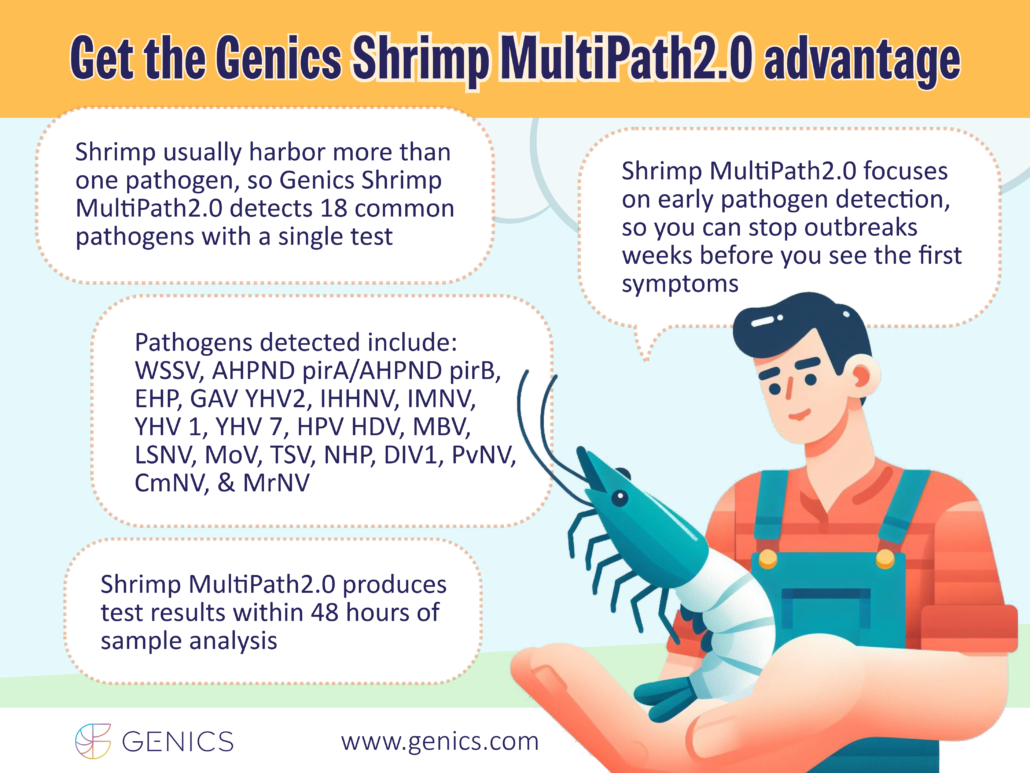
One of the standout features of Shrimp MultiPath2.0 is its unique capacity to detect 18 common shrimp pathogens with a single test: WSSV, AHPND pirA/AHPND pirB, EHP, GAV YHV2, IHHNV, IMNV, YHV 1, YHV 7, HPV HDV, MBV, LSNV, MoV, TSV, NHP, DIV1, PvNV, CmNV and MrNV. 

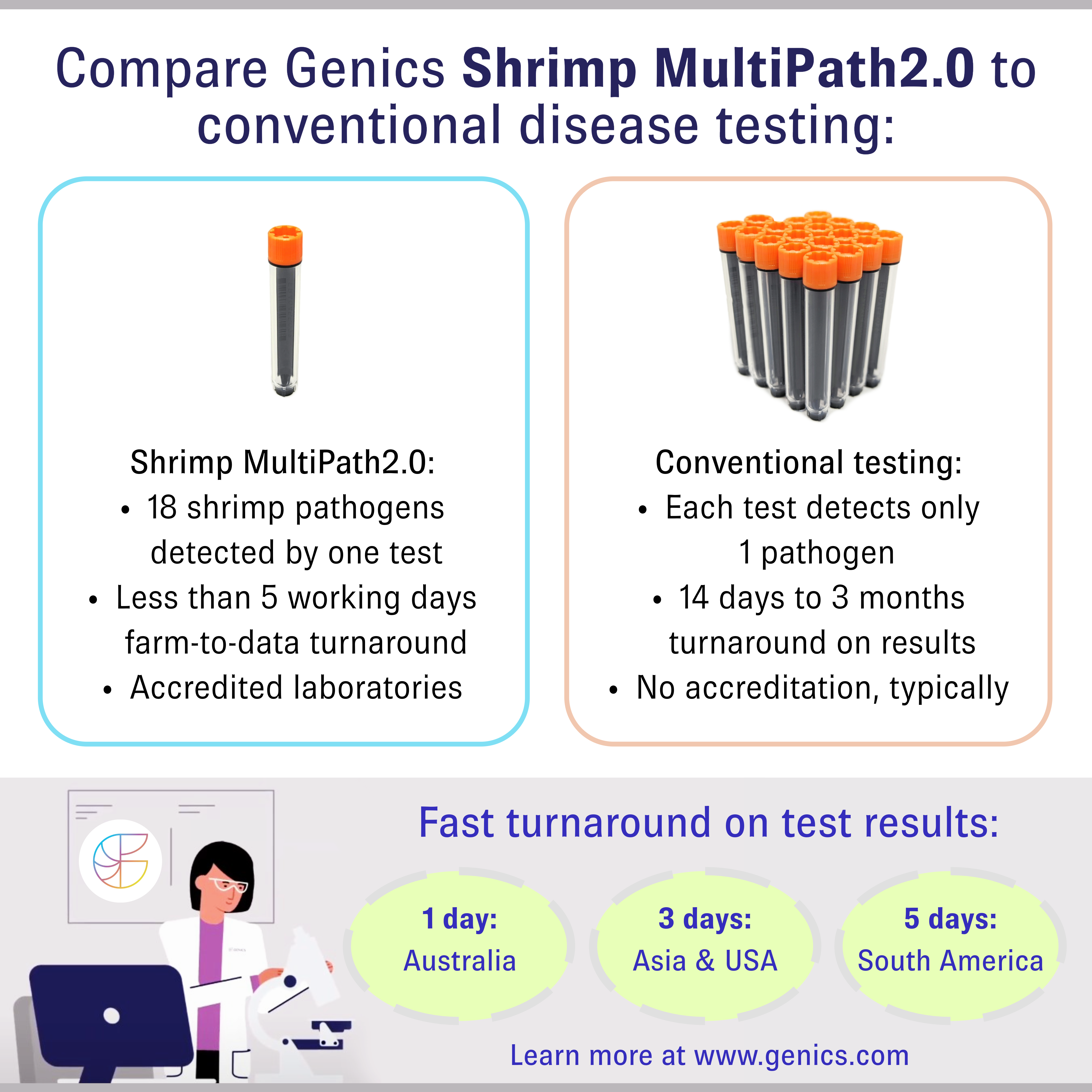
Unlike conventional kits and services that look for only one pathogen per sample, Shrimp MultiPath2.0 allows farmers to detect every prominent disease threat with a single highly accurate test. Shrimp MultiPath2.0 also detects and differentiates between genetic subvariants of major pathogens, delivering optimal protection. 

When it comes to a species like shrimp where there are multiple pathogens at any given time causing production impacts, Genics Shrimp MultiPath2.0 is the solution of choice, defining multi-factorial production risks at hand. 

Fast and reliable results 

When it comes to disease protection in aquaculture, time is of the essence. Genics sets the industry standard for sample shipping, with a 1-to-5-day farm-to-lab data delivery window worldwide, including shipping and processing time at the lab.  

Once clients’ samples arrive at the Genics lab, Shrimp MultiPath2.0 delivers accurate, verified test results within 48 hours. This rapid global response time empowers farmers to take prompt action based on accurate data they can trust, minimizing the risk of disease outbreaks and potential stock losses. 

Shrimp MultiPath2.0 sample collection systems are easy to use on the farm, and Genics goes the extra mile with real-time GPS sample tracking. This exclusive service for Genics key clients provides peace of mind to farmers, knowing that their samples are securely tracked from the farm to the laboratory every minute of the day. 


Farmers’ early warning system against disease 

Genics Shrimp MultiPath2.0 acts as an early warning system, alerting farmers to the presence of pathogens weeks before any visible signs of illness appear in their animals. This proactive approach is invaluable in preventing costly stock losses and maintaining the health of the aquaculture environment. 

In the case of infectious hypodermal and hematopoietic necrosis virus (IHHNV), Shrimp MultiPath2.0 can significantly increase farm gate value by up to US$52,000.00 per hectare. For devastating pathogens like white spot syndrome virus (WSSV) and IMNV, Shrimp MultiPath2.0 has the potential to save entire harvests, sparing farmers from substantial financial setbacks.*  

Cost-effective, precise testing 

Shrimp MultiPath2.0 detects a broad spectrum of pathogens, focusing on the most economically damaging. This comprehensive, targeted approach enables farmers to defend against the most critical disease threats efficiently. 

Moreover, precision is a cornerstone of Genics’ testing methodology. Shrimp MultiPath2.0 includes control tests that validate the integrity of DNA and RNA in every sample, setting the bar higher than industry standards. This precision is particularly crucial for shrimp, which contain PCR inhibitors like chitin.  

Verified and secure data 

Genics prioritizes the security and integrity of test data by encrypting and delivering it directly to clients for exclusive use. This commitment to data security ensures confidentiality and has fostered a trusting relationship between Genics and its clients. 


The new standard for shrimp disease control  

With recent research clearly showing the inadequacy of POC test kits, which are still widely used in the industry, Genics is committed to providing a better alternative for farmers that is not only effective but also less expensive than conventional testing.  

Shrimp MultiPath2.0 is a genuine innovation in shrimp pathogen detection, addressing the industry’s need for a comprehensive, fast, and accurate testing solution. With its ability to detect a wide range of pathogens, deliver swift results, and provide secure, verified quantitative data, Shrimp MultiPath2.0 sets a new standard for certainty and safety. 

Want to know more about Shrimp MultiPath2.0?  

Get all the information you need and book a free consultation here.


*Source: Sellars, M.J., Cowley, J.A., Musson, D., Rao, M., Menzies, M., Coman, G.J., Murphy, M. 2019; Reduced growth performance of Black Tiger shrimp (Penaeus monodon) infected with infectious hypodermal and hematopoietic necrosis virus.  Aquaculture 488: 160-166. 

Celebrate National Prawn Day – Australia

At Genics, we’re proud to be part of the global prawn (shrimp) farming community.

That’s why we’re excited to support National Prawn Day Australia, celebrating our hardworking aquaculture friends.

Prawns are a crucial source of protein for a growing world population, and we’re committed to helping farmers produce healthy, high-performance stocks to make this nutritious food widely available.

National Prawn Day is an industry-led initiative, showcasing the many delicious, easy and healthy ways we can include protein rich prawns in our regular diets.

Genics Christmas Message 2022

We would like to wish you a Merry Christmas and a very Happy Holiday. From our family to yours, thank you for your dedication and commitment throughout 2022.

We love working with you on early pathogen detection, risk mitigation and on your breeding programs.

This year we’ve seen great success throughout Ecuador, Indonesia, Vietnam and abroad. The impacts that we are having in terms of early pathogen detection and breeding programs are phenomenal.

Thank you.

Merry Christmas and Happy New Year!
Team Genics.

From LinkedIn request to Investor

Early this week, Genics CEO Melony Sellars appeared in the Australian Financial Review as part of an exclusive story.

The article describes how WiseTech Global co-founder Richard White went from LinkedIn contact to becoming an investor at Genics.

The article also tells how Genics MultiPath™ technology positively impacts the shrimp and pig farming sector by allowing farmers to proactively test for pathogens and develop early warning systems to mitigate risks.