


The Postlarvae Dilemma: Why Visual Quality Checks Only Tell Part of the Story
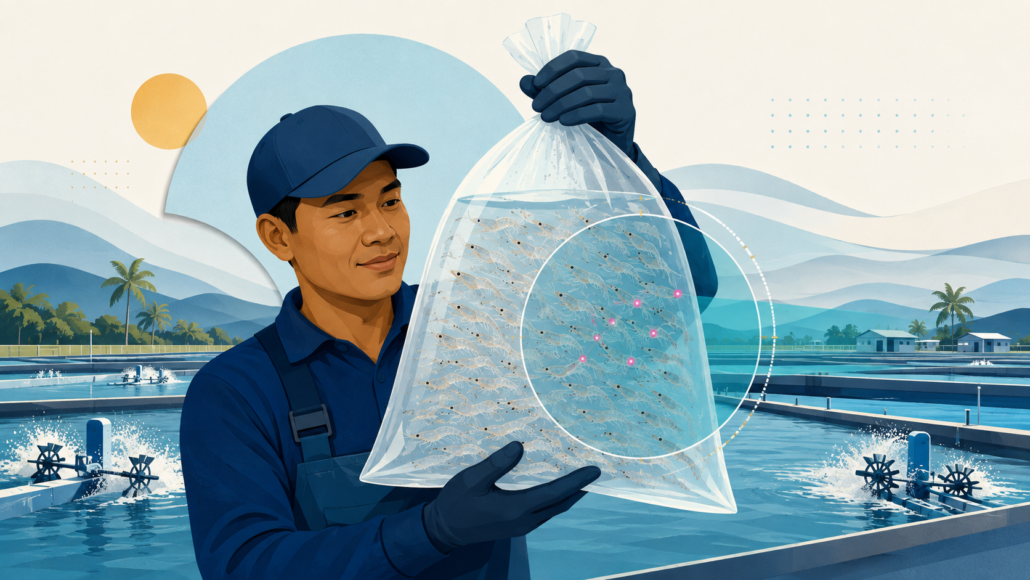
On a modern shrimp farm, the arrival of a new batch of postlarvae (PL) is a moment of calculated optimism. Assumptions are made that the animals have been carefully produced, transported and acclimated. At first inspection, they can appear active, uniform and healthy: swimming strongly, feeding well and showing no obvious abnormalities.
Yet, several weeks after stocking, two apparently similar batches can follow very different paths. One crop may progress steadily, while another experiences uneven growth, declining survival or mortality that was not anticipated at the time of stocking.
This is the postlarvae dilemma. Visual quality matters, but appearance alone cannot reveal every health risk. For farmers whose crop economics depend heavily on what enters the pond, that missing information can be costly.
1. Visual Quality Checks Answer Only Part of the Question
Visual inspections and basic morphometric measurements remain important parts of postlarvae quality assessment. A healthy-looking batch may feature:
- A filled gut: indicating active feeding at the time of inspection.
- A clean carapace: with no obvious fouling organisms or visible abnormalities.
- A strong muscle-to-gut ratio: supporting an assessment of physical development.
- Consistent development: including relatively uniform size and moulting patterns across the batch.
These visual indicators remain valuable, but they cannot reveal every health risk. A batch may appear active, uniform and well-fed while carrying a pathogen at a level too low to produce visible signs. Visual assessment shows how the postlarvae look at the time of inspection; sensitive pathogen testing adds another layer of information about risks that may otherwise enter the pond undetected.

Supplier health certification and Specific Pathogen Free (SPF) status are important parts of postlarvae procurement, but they should not be interpreted as protection against every pathogen risk. SPF status applies to specified pathogens within a defined surveillance program; it does not mean the animals are free from all pathogens or that exposure cannot occur later.
Independent, batch-specific testing provides an additional verification point. It does not replace supplier testing or visual quality assessment; it strengthens them by adding another layer of pathogen data to the stocking decision.
2. Hidden Pathogen Risk Can Affect Farm Performance
When a pathogen is present in apparently healthy postlarvae, its impact may not be immediate or inevitable. The risk is that infection may amplify or interact with environmental stress after stocking. Whether this develops into a production problem depends on multiple factors, including the pathogen, pathogen load, co-infections, animal health, pond conditions and farm management.

The Commercial Cost of Uncertainty
When a health issue becomes apparent after stocking, the cost can extend well beyond the original purchase price of the postlarvae. Reduced feeding, uneven growth and mortality can disrupt feed estimates, increase effective Feed Conversion Ratio (FCR) and contribute to a less uniform crop.
The later a problem becomes visible, the more feed, energy, labour and pond capacity may already have been committed. At harvest, lower survival and a wider size distribution can reduce saleable biomass and weaken the value of the crop.
This does not mean every pathogen detection predicts disease or poor performance. It means farmers need reliable data to interpret pathogen risk in context and decide how that risk should be managed before additional resources are committed.
3. Building a Stronger Postlarvae Verification Process
Leading hatcheries and farms are increasingly treating postlarvae health verification as a shared responsibility. The goal is not to question every supplier claim, but to ensure both parties are making decisions from the strongest available information.
Practical verification points can include:
- Assessing visual and physical quality: using agreed hatchery and farm criteria.
- Collecting representative samples: from the batch that will be transferred or stocked.
- Using sensitive, specific multi-pathogen testing: suited to apparently healthy animals.
- Reviewing pathogen presence and load: before movement, quarantine release or stocking.
- Agreeing actions when risk is identified: such as further sampling, holding a batch or strengthening biosecurity controls.

Different Tests Answer Different Questions
Single-target or point-of-care testing can be useful when animals are clinically affected and there is a clear suspected cause. Routine monitoring of apparently healthy postlarvae, quarantine and translocation testing are different tasks: they require broader visibility across multiple pathogens because there may be no clinical signs to guide target selection.
Not all PCR testing provides the same level of visibility. Test coverage, target specificity, analytical sensitivity, sample selection, replication, quality controls and result interpretation all influence the value of the data. Quantitative PCR can also provide pathogen load information, giving farms and hatcheries more context for risk-based decisions.
Digital imaging can strengthen measurement of size and uniformity, but it cannot replace pathogen testing. These tools answer different questions and are most useful when applied as complementary layers of postlarvae quality assurance.
Adding Pathogen Visibility Before Stocking
High-quality postlarvae cannot be defined by appearance alone. Visual assessment, hatchery quality controls and supplier health documentation all provide valuable information, but none can show farmers every pathogen risk that may be present in apparently healthy animals.
No single test can guarantee farm performance. However, pathogen testing can close an important information gap before stocking. Genics Shrimp MultiPath3.0™ (SMP3.0™) screens for 19 shrimp pathogens in one test, providing hatcheries and farmers with comprehensive data to help assess pathogen risk before stocking and continue monitoring across production.
Used alongside representative sampling, visual quality checks and strong biosecurity, SMP3.0™ supports better-informed stocking decisions — helping teams identify risks earlier, protect their investment and stock with greater confidence.
Want to know more about Genics Shrimp MultiPath™?
Get all the information you need and book a free consultation with Genics experts today.

